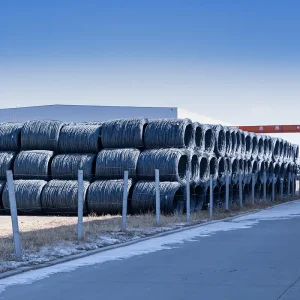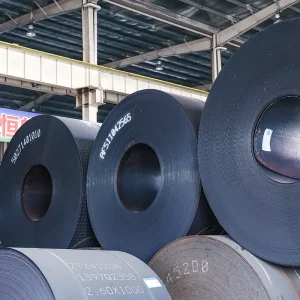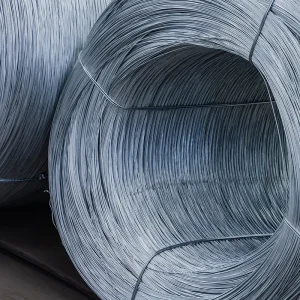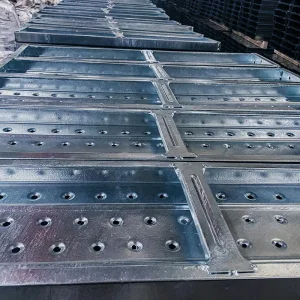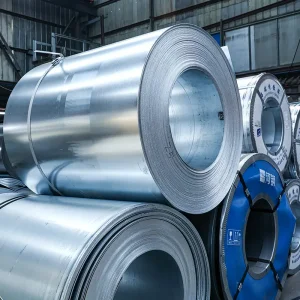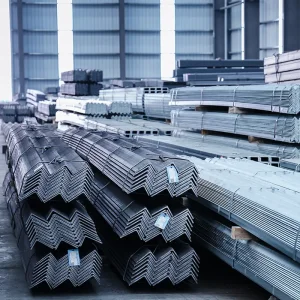
In the global industrial sector, wire rods serve as the foundational bedrock for thousands of processing, structural, and heavy-duty manufacturing tasks. Hansheng Technology (Hebei) Co., Ltd., strategically positioned in Tangshan City, Hebei Province—the preeminent capital of China's heavy steel manufacturing corridor—has forged a reputation for producing high-grade structural alloys, customized carbon steel wires, and high-tensile wire products.
Established in 2006, our firm has transitioned from a localized steel mill into a high-technology, export-oriented industrial enterprise. Our geographical positioning is tailored for streamlined maritime and continental logistics: our main factory sits exactly 150 kilometers from the Tianjin seaport—one of the largest dry bulk and container port complexes globally—and 150 kilometers from Beijing, facilitating fast transport, comprehensive custom clearance channels, and decreased transit overheads.
Operating 8 advanced rolling mill and hot-drawing lines, our manufacturing systems yield over 300,000 to 650,000 metric tons of steel and wire products annually. Our production protocols conform strictly to widely implemented international benchmark standards, including GB (China), JIS (Japan), ASTM (USA), DIN (Germany), EN (Europe), and AS/NZS (Australia/New Zealand), ensuring that every consignment entering the global supply chain meets rigorous requirements for microstructure integrity, diameter accuracy, and performance repeatability.
Industrial wire rods are categorized by chemical purity, mechanical performance, and subsequent processing compatibility. Broadly split between low-carbon, high-carbon, and alloyed grades, our wire rods undergo thermo-mechanical rolling processes to refine grains, prevent micro-segregation of carbon, and maintain tight dimensional tolerances.
| Material Category | Common International Grades | Carbon Content Range (%) | Tensile Strength (MPa) | Primary Industrial Applications |
|---|---|---|---|---|
| Low-Carbon Wire Rods | SAE 1006, SAE 1008, JIS SWRM6 | < 0.10% | 290 - 410 | Nails, mesh welding, galvanized utility wire, structural ties, hanger manufacturing. |
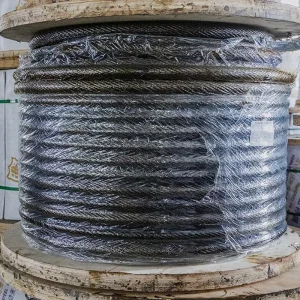
| Medium/High Carbon Rods | SAE 1060 - 1080, JIS SWRH72B | 0.60% - 0.85% | 850 - 1200+ | High-tensile steel wire ropes, cableway strands, spring production, PC strand, tire cord. |
| Cold Heading Quality (CHQ) | SAE 10B21, 10B33, JIS SWRCH22A | 0.18% - 0.35% + Boron | 450 - 650 | Cold forged fasteners, automotive bolts, high-precision machined screws and pins. |
| Alloy Spring Steels | 55CrSi, 60Si2Mn, SUP12 | 0.50% - 0.65% + Cr/Si/Mn | 1100 - 1400 | Suspension springs, high-stress engine valvetrains, railway damping elements. |
To ensure stability in demanding applications like multi-stage cold drawing, we monitor element concentration down to the parts-per-million (PPM) level. Trace elements like Oxygen and Nitrogen are restricted to minimal concentrations to prevent brittle fractures during drawing. Additionally, slag inclusion counts are verified using ultrasonic and microscopic metallurgical evaluations.
Manufacturing quality steel requires more than raw resources; it depends on process control at every stage. Hansheng Technology's production facility uses high-speed wire rod rolling blocks designed to handle exit speeds exceeding 100 meters per second. This speed requires real-time thermal monitoring to ensure uniform structural transformation throughout the coil.
Controlled cooling determines the pearlite spacing and grain size of wire rods. Our Stelmor conveyor system adjusts air volume and cooling rates to produce a soft ferrite-pearlite matrix for cold drawing, or high-tensile wire rods with fine pearlite structures.
Using dual-axis laser measurement gauges, our lines track rod diameters in real time. We maintain a standard tolerance of ±0.15mm across the entire coil length, preventing drawing dies from binding or breaking.
Every single coil of steel wire rod is marked with a barcode that traces its production details back to the original steel ladle heat number. This gives procurement managers access to chemical testing reports, furnace histories, and tensile test certificates.
By combining advanced machinery with optimized logistics from the Tangshan-Tianjin industrial zone, we maintain stable production schedules even during seasonal fluctuations. This enables us to fulfill global contracts reliably, ensuring consistent volume, chemistry, and delivery timelines.
Procurement of bulk industrial steel involves complex international logistics, regional compliance, and quality control. For supply chain managers, importing wire rods requires balancing physical material properties with trade terms, moisture protection, and shipping constraints.
Our site is situated close to Tianjin Port, allowing containerized or break-bulk shipping with minimal overland transit times.
To prevent saltwater corrosion, high-carbon wire rods are protected with moisture inhibitors, secure strapping, and protective canvas wrapping.
We manufacture products to match global standards, including ASTM A510, JIS G3505, and EN 10016, simplifying localized engineering approvals.
We provide full documentation, including Mill Test Certificates (MTC) conforming to EN 10204 3.1, Bill of Lading, and Certificates of Origin.
As industries focus on lowering carbon footprints, the steel sector is adopting cleaner production practices. Hansheng Technology is tracking these changes by adapting its processes to meet new environmental requirements and energy targets.
Our roadmap centers on three main technological improvements:
Our quality assurance system is designed to catch material defects before products leave our facility. Every batch of wire rods undergoes standardized mechanical and chemical testing:
We verify the concentration of Carbon, Manganese, Silicon, Phosphorus, and Sulfur for every heat of steel. Trace elements like Chromium, Nickel, and Copper are monitored to ensure uniform mechanical behavior during heat treatment.
Our laboratory uses calibrated tensile testers to confirm Yield Strength, Tensile Strength, and percentage elongation. This ensures the steel wire rods perform reliably in cold drawing and forming processes.
Excessive decarburization can weaken the steel surface. We monitor and control decarburization depth through microstructure analysis, ensuring it remains within standard limits for automotive and fastener applications.
Since 2006, our materials have been utilized in several global infrastructure, commercial building, and industrial supply projects. These case studies highlight our contract fulfillment, material performance, and logistics capabilities.
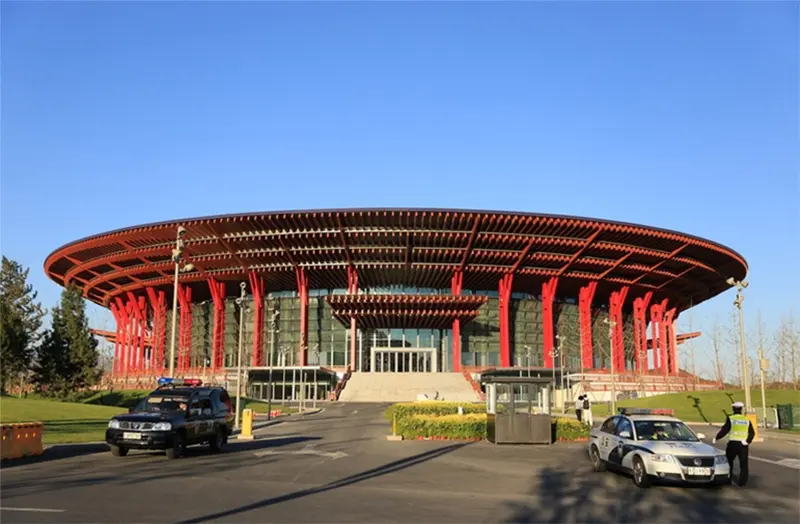
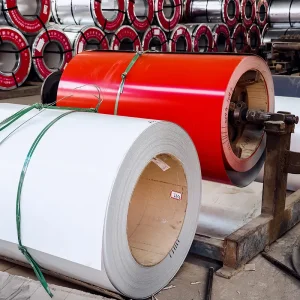
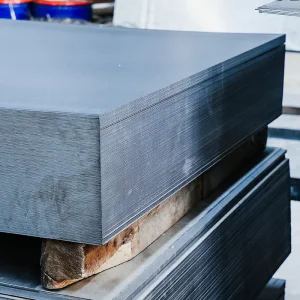
In addition to these structural projects, we regularly ship custom steel products to partners worldwide: H-beams to Dubai, Steel plates to Saudi Arabia, JIS channels to South Korea, Galvanized wire to Florida, PC strand to the Philippines, Sheet piling to Indonesia, PPGI coils to Chile, IPEAA sections to Kuwait, and Galvanized steel to Spain.
 Hanshen