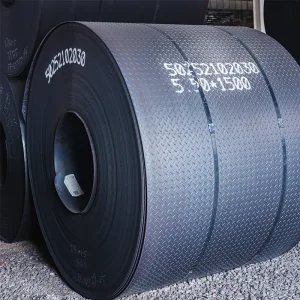
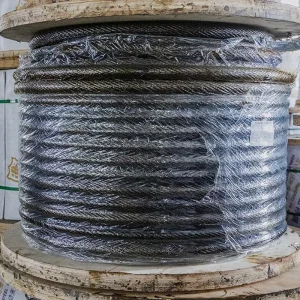
Direct from our mill. Custom sizes and international compliance certified.
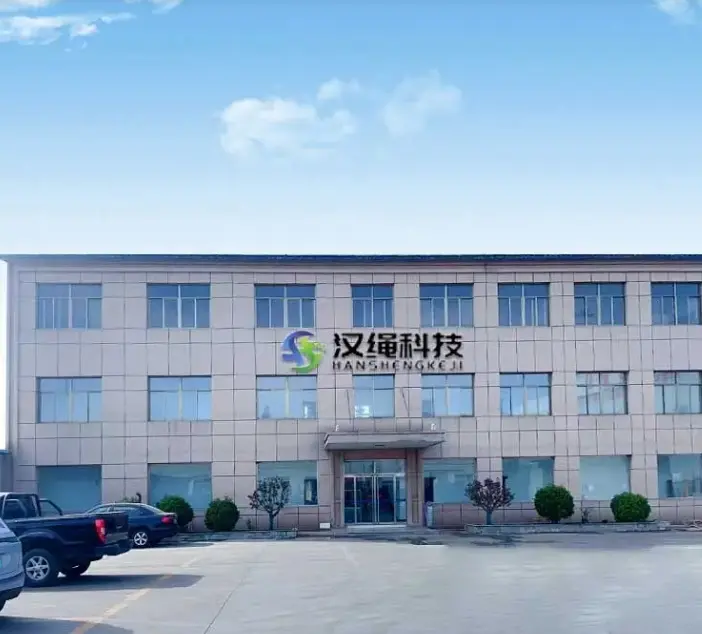
Established in 2006, Hansheng Technology (Hebei) Co., Ltd. is strategically situated in Tangshan City, Hebei Province—the heart of China’s steel industry. With a prime location just 150 kilometers from the Tianjin seaport and 150 kilometers from the capital, Beijing, we benefit from an exceptional logistics network that ensures efficient global shipping.
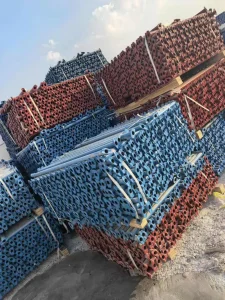
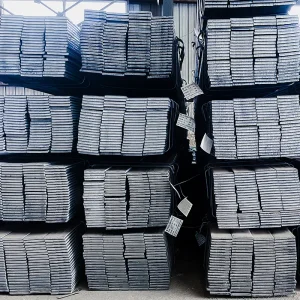
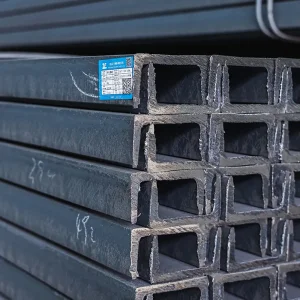
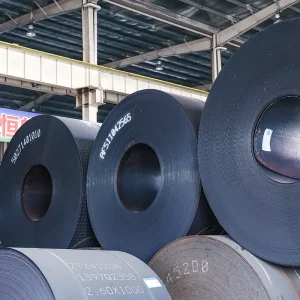
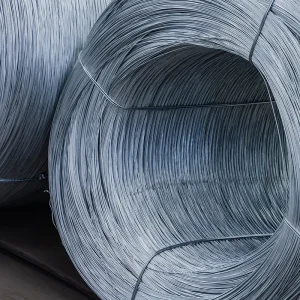
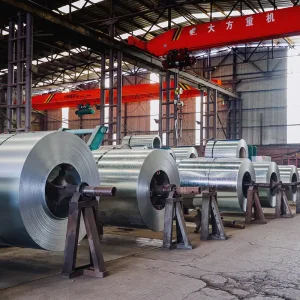
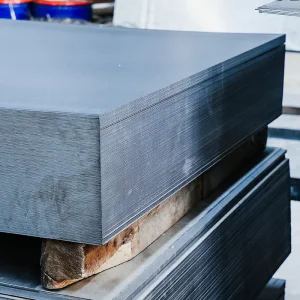
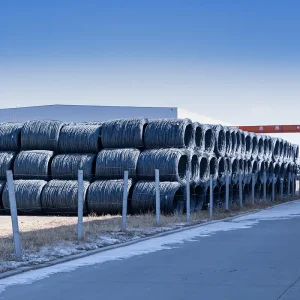
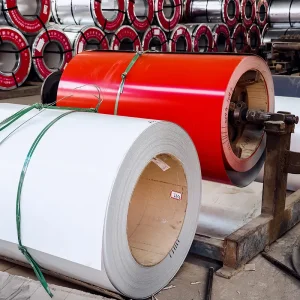
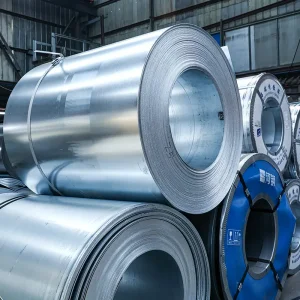
We operate 8 high-efficiency production lines with a total annual production capacity of 300,000 metric tons. Our extensive product portfolio includes Galvanized Steel Wire, Hot/Cold Rolled Steel Coils and Sheets, GI/PPGI, GL/PPGL, and various Section Steels, all meticulously manufactured to adhere to rigorous international standards such as GB, JIS, ASTM, DIN, EN, and AS/NZS.
Driven by a commitment to supply chain excellence, competitive pricing, and professional service, our products have earned recognition across markets in the Middle East, Southeast Asia, North Asia, Africa, the Americas, and Europe. We operate under the firm philosophy of "honoring contracts and keeping promises." We view our clients not just as customers, but as valued partners, and we pride ourselves on our impeccable track record of contract fulfillment.
How we ensure quality, efficiency, and reliability for heavy industrial steel sourcing.
Founded in 2006, our enterprise brings nearly two decades of deep industry experience, providing the engineering stability and market expertise to navigate complex global requirements.
Equipped with 8 state-of-the-art hot rolling and drawing production lines, we maintain a robust annual output of 300,000 metric tons, ensuring high-volume demand fulfillment without delays.
Our mill in Tangshan, Hebei Province is perfectly situated 150 km from Tianjin Xingang Port, facilitating extremely cost-efficient and rapid international bulk cargo shipping.
We work to global architectural guidelines, maintaining full certifications across ISO 9001:2000, ISO 14001, and ensuring our angle steels align with ASTM A36, EN 10025, and JIS G3101.
We mandate pre-shipment inspections (PSI) and material test certificates (MTC) for every batch, offering chemical element analysis and mechanical testing reports transparently.
A specialized trade division of over 35 experts guarantees continuous post-purchase support, processing customs declarations, and facilitating bulk shipments to diverse global markets.
A comprehensive analysis of metallurgical structures, manufacturing tolerances, international standard alignment, and load performance factors.
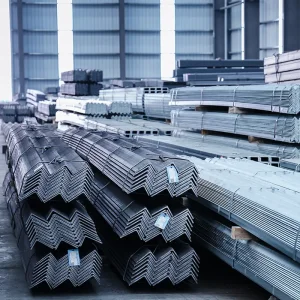
Hot rolled equal angle steel (also designated as L-shaped steel profiles) is one of the most critical structural elements in modern construction engineering. Unlike cold-formed sections, hot rolled equal angles are produced at temperatures exceeding the recrystallization point of steel (typically above 1,100°C to 1,250°C). This high-temperature deformation process refines the grain structure of the steel, eliminates internal structural stresses, and enhances the ductility and isotropic mechanical performance of the material.
Equal angle sections feature two legs of identical length meeting at a precise 90-degree angle. The design provides exceptional structural resistance against biaxial bending, compression, and torsional forces. In civil engineering, the choice of equal angles is driven by their high radius of gyration, which makes them highly efficient when configured as compression members in trusses, transmission towers, and framing systems.
For international procurement managers, understanding material equivalence is essential to satisfy localized building code compliance. Hansheng Technology manufactures hot rolled equal angles in accordance with multiple international regulatory systems, assuring structural integrity and code compliance in diverse jurisdictions:
| Standard | Common Grade | Yield Strength (Min, MPa) | Tensile Strength (MPa) | Elongation (Min, %) | Main Applications |
|---|---|---|---|---|---|
| ASTM A36 | A36 | 250 | 400 - 550 | 20% | General fabrication, structural frames, bridges |
| EN 10025-2 | S235JR / S355JR | 235 / 355 | 360-510 / 470-630 | 26% / 22% | Heavy civil engineering, high-rise construction |
| JIS G3101 | SS400 | 245 (thickness <16mm) | 400 - 510 | 21% | Shipbuilding, machinery components, towers |
| AS/NZS 3679.1 | Grade 300 / 350 | 300 / 350 | 440 / 480 | 22% | Mine infrastructure, civil bridges, transport structures |
Structural steel is frequently exposed to aggressive atmospheric conditions, marine environments, or high-humidity regions. Hansheng Technology addresses these challenges by offering advanced secondary surface treatments to ensure long-term structural lifespan:
Hot-Dip Galvanizing (HDG): Conforming to ASTM A123 or ISO 1461, our hot-dip galvanization line coats the equal angle steel with a protective zinc layer (typically ranging from 450 g/m² to 610 g/m², equivalent to 65-85 microns). This creates a durable metallurgical bond, offering cathodic protection and preventing rust for over 50 years in rural environments and 25 years in harsh coastal settings.
Pre-Shipment Verification and MTCs: To satisfy compliance in highly regulated markets such as the European Union and Australia/New Zealand, all dispatches are accompanied by Mill Test Certificates (MTC) conforming to EN 10204 3.1. We welcome third-party inspections by globally recognized testing bureaus such as SGS, Bureau Veritas (BV), or Intertek, testing chemical ladle values (carbon equivalent CEV), yield/tensile ratios, and Charpy V-notch impact performance.
Tangshan, located in northern China's Hebei Province, produces more steel than many entire industrial nations. Sourcing hot rolled equal angles directly from our Tangshan facilities offers unmatched supply chain advantages for international buyers:
Raw Material Integration: Our facility is directly integrated with regional iron ore processors and smelting plants, buffering production from upstream raw material price swings and guaranteeing chemical consistency. We maintain buffer stocks of billets to rapidly start rolling campaigns.
Unmatched Manufacturing Scale: Managing 8 production lines yields substantial economies of scale. We are capable of fulfilling high-volume industrial orders of thousands of metric tons per month while remaining highly competitive in pricing compared to regional domestic mills.
Logistical Optimization: Being located 150 km from the deep-water port of Tianjin (Xingang) allows us to move steel sections via port-adjacent rail or high-capacity flatbeds to sea terminals overnight. This cuts internal transport costs and minimizes lead times to critical maritime freight routes.
From high-voltage electrical grids to deep foundation shoring, discover where our structural equal angles deliver strength.
L-shaped steel angles serve as the core lattice elements in high-voltage transmission pylons and telecommunication masts. Their low weight-to-strength ratio and high wind load resistance make them critical in national grid infrastructure projects.
In industrial warehouses and modular structures, equal angles are used as purlins, girts, and bracing components. Their standard shape allows for rapid design, drilling, and high-strength bolting on assembly sites.
With the global push toward clean energy, hot-dip galvanized steel angles provide robust support structures for utility-scale photovoltaic arrays, resisting long-term soil corrosion and high shear wind loads.
Analyzing key structural factors driving the international steel industry toward decarbonization, compliance, and digitalization.
Sourcing managers must look beyond unit price per metric ton. To mitigate risks in long-distance logistics, procurement models should prioritize:
The structural section steel industry is undergoing significant transformation, driven by environmental and technological developments:
Clear, direct answers regarding structural steel angle standards, logistics, tolerances, and procurement options.
We work closely with major metallurgical groups and global logistics operators to ensure supply chain reliability.

Complete product range for steel wire, structural sections, and coated sheet metals.
 Hanshen