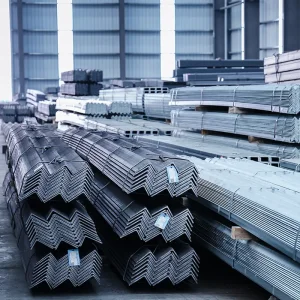
Wholesale Stainless Steel Soldering Wire Manufacturer & Factory

Premium Grade Alloys, Precision Flux Formulations, and Resilient Global Supply Solutions Powered by Hansheng Technology

About Hansheng Technology

Two Decades of Excellence in Steel and Alloy Manufacturing

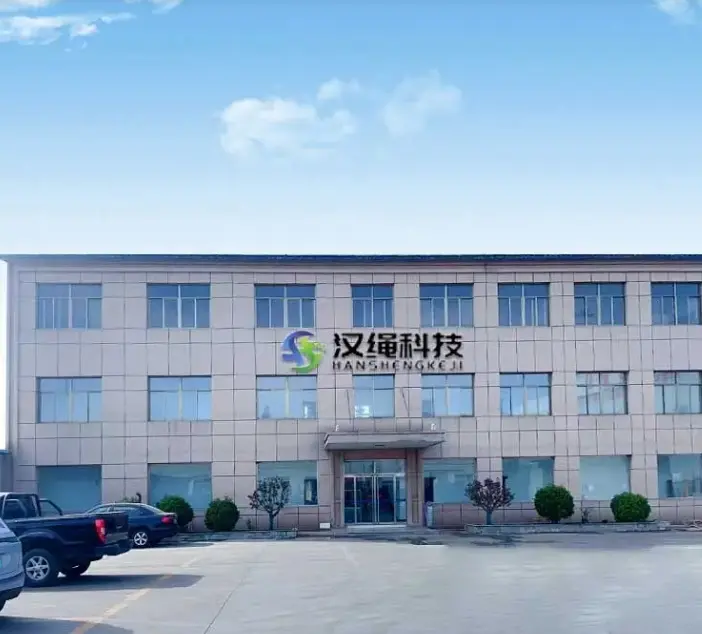
Strategically located in Tangshan City, Hebei Province—the epicenter of China's advanced steel production industry—Hansheng Technology (Hebei) Co., Ltd. has established itself as an export-oriented global leader in high-performance metallurgy. Established in 2006, we are positioned just 150 kilometers from the天津 (Tianjin) seaport and 150 kilometers from Beijing, facilitating rapid and efficient global logistical routing.

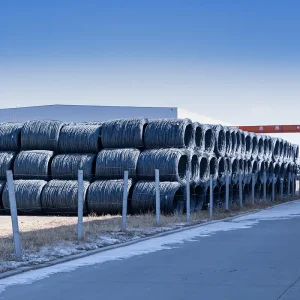
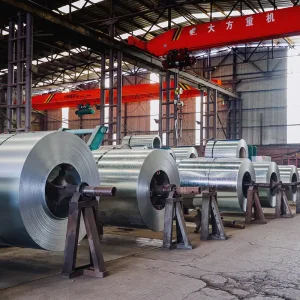
We operate 8 high-capacity production lines designed to output an annual capacity of 300,000 metric tons of premium wire, coil, and scaffolding products. Our dedication to ISO 9001:2000, ISO 14001, and global quality control protocols guarantees that every shipping container matches the structural standards of GB, JIS, ASTM, DIN, EN, and AS/NZS.
Global Operations Philosophy
We believe in "honoring contracts and keeping promises." We support clients not simply as commercial buyers, but as long-term strategic partners, ensuring full visibility into quality control inspections, chemical certifications, and shipping lead times.
Hansheng Technology Factory Facility Profile
2006
Established Year
8
Advanced Production Lines
300K+
Annual Tons Capacity
19+
Years Export Experience

Industrial Whitepaper: Stainless Steel Soldering Wire Mechanics

An authoritative analysis of chemistry, physical properties, and process considerations for high-yield precision soldering.

1. Metallurgical Composition and Alloy Properties

Unlike standard soft solders, stainless steel soldering requires specialized alloy configurations that can combat the surface oxides characteristic of chromium-rich matrices. The presence of Chromium (Cr) in concentrations above 10.5% creates a dense, self-healing oxide layer ($Cr_2O_3$) that prevents wetting by normal solders. To achieve structural bonding, the soldering wire and flux chemistry must perform a critical micro-metallurgical reduction reaction.

By controlling the levels of Nickel (Ni), Molybdenum (Mo), and Carbon (C), our factory optimizes the solidification profile of the solder interface. The addition of Molybdenum provides enhanced resistance against localized pitting corrosion, which is vital in maritime and chemical assembly environments.

Standard Grade C (%) Max Cr (%) Range Ni (%) Range Mo (%) Range Primary Application Profile
308L / 308LSi 0.03 19.5 - 22.0 9.0 - 11.0 0.75 Excellent general corrosion resistance; utilized for AISI 301, 302, and 304 joints.
309L / 309LSi 0.03 23.0 - 25.0 12.0 - 14.0 0.75 Dissimilar metal joining (e.g., carbon steel to stainless steel), highly heat resistant.
316L / 316LSi 0.03 18.0 - 20.0 11.0 - 14.0 2.0 - 3.0 Marine Grade. Superior resistance against chloride-induced stress corrosion cracking.
347 / 347Si 0.08 19.0 - 21.5 9.0 - 11.0 Cb+Ta: 10xC min Stabilized with Columbium/Tantalum to prevent intergranular chromium carbide precipitation.

2. Flux-Cored vs. Solid Stainless Steel Soldering Wire

The choice between flux-cored wire and solid wire depends on the application method (manual soldering, automated robotic soldering, or gas metal arc processes). Solid wire relies heavily on external, highly active acid fluxes containing zinc chloride or ammonium chloride.

Flux-cored configurations feature a core composed of inorganic or organic acid activators that vaporize at exact thermal points, cleaning the chromium oxide instantly before the molten alloy wets the parent material. This reduces joint voids, eliminates excess spatter, and minimizes post-solder cleaning costs.

Oxide Layer Penetration
Formulated with halogen-activated agents to target and disrupt Chromium oxides quickly during heat cycles.
Optimized Surface Tension
Balanced alloy viscosity ensures high capillary flow in close-tolerance joints, creating hermetic seals.
Microstructural Integrity
Ultra-low carbon levels prevent chromium carbide precipitation, avoiding weld decay or joint embrittlement.

Localized Application Scenarios

How our stainless steel soldering wire meets specific industrial demands in regional hubs worldwide.

Automotive & Exhaust Engineering (Europe)
Used heavily in Germany, Italy, and Eastern European manufacturing hubs for welding sensors, oxygen probes, and exhaust brackets where high vibration and thermal cycling are common.
High-Reliability Electronics (East Asia)
Crucial for assembly lines in Japan, South Korea, and Taiwan where stainless steel sensor casings, medical instruments, and battery terminals require micro-joints without thermal warping.
Marine Infrastructure (North America & Gulf)
Our specialized 316L wire resists harsh marine atmospheres, brackish water, and high-chloride environments along shipping lanes, offshore oil rigs, and port infrastructures.
Chemical Processing & HVAC (Middle East)
Engineered to withstand extreme ambient temperatures and corrosive gas exposure. Ideal for desalination systems and pipeline monitoring equipment in Saudi Arabia, UAE, and Qatar.

China Factory Supply Chain Resilience

Why sourcing from our Tangshan manufacturing facility provides structural cost and logistics advantages.

Global supply networks face volatile shifts, but our facility in Tangshan, Hebei Province offers unparalleled stability. Tangshan lies at the center of the Bohai Bay Economic Circle. It accounts for a significant share of China's high-grade iron and steel production, providing us with direct, uninterrupted access to raw alloy materials and reducing domestic transit costs.

Our proximity to Tianjin Port (150 km)—one of the largest deepwater ports in Northern China—allows us to bypass internal transport delays and secure prioritized shipping space. With a dedicated annual output of over 300,000 metric tons (with potential expansion scaling to 650,000 metric tons via partner mills), we balance large-scale inventory buffers to insulate global distributors from sudden raw material price shocks.

Pre-Shipment Testing & Quality Auditing
Our QA team performs spectrographic analysis on every melt, tensile strength testing, and spool surface examinations. We supply Mill Test Certificates (MTC) matching EN 10204 3.1 standards with every container.

Cooperative Port and Mill Partners

Logistics Partner Logo 1
Logistics Partner Logo 2
Logistics Partner Logo 3
Logistics Partner Logo 4
Logistics Partner Logo 5
Logistics Partner Logo 6

Technological Roadmap & Future Outlook

Where the soldering and metallurgy industry is headed, and how we are preparing for the next decade of challenges.

Lead-Free and Zero-Halogen Fluxes
To satisfy RoHS, REACH, and strict environmental directives, our chemical laboratory is developing halogen-free activators. These new formulations provide strong capillary action on stainless steel without emitting volatile organic compounds.
Automation-Ready Micro-Wire Diameters
As electronics shrink, we are scaling our wire-drawing lines to yield ultra-fine micro-wires (down to 0.1mm) with high dimensional stability. These micro-wires are designed specifically for high-speed automated feed systems.
Smart Manufacturing & Quality Traceability
By embedding smart laser-scanning QA sensors along our drawing lines, we track wire roundness and flux consistency in real time. We record this data to ensure batch traceability down to the individual spool level.

Frequently Asked Questions (FAQ)

Technical answers to critical questions about importing, using, and certifying stainless steel soldering wires.
1. Why is stainless steel soldering wire more difficult to use than standard steel wire?
Stainless steel contains chromium, which forms a thin, tough, and self-healing chromium oxide layer on the wire's surface. This layer prevents standard solder alloys from wetting the metal. To successfully solder stainless steel, you need highly active, specialized fluxes (typically acid-based or organic-acid based) and precise temperature control to break through the oxide layer and form a strong intermetallic bond.
2. What is the difference between solid and flux-cored stainless steel wire?
Solid wire is uniform metal throughout its cross-section and requires you to apply an external flux to the joint. Flux-cored wire has a hollow center filled with dry flux powder or liquid activators. As you apply heat, the inner flux melts and flows ahead of the wire, cleaning the joint surfaces immediately and shielding the weld pool, which makes it ideal for automated systems.
3. How do AISI 308L, 309L, and 316L grades differ in application?
308L is the standard grade for joining common stainless steels like AISI 304. 309L features higher chromium and nickel content, making it perfect for joining dissimilar metals, such as stainless steel to carbon steel. 316L contains molybdenum, which gives it superior resistance to pitting and corrosion in marine, pharmaceutical, and chemical environments.
4. How does Hansheng Technology prevent surface cracking during the wire drawing process?
We use multi-stage cold drawing and precise intermediate annealing cycles. By carefully controlling speed and temperature, we relieve internal stresses and prevent micro-cracks. In addition, we continuously monitor the drawing dies to ensure a smooth, uniform surface that minimizes feed resistance in automated welding and soldering machines.
5. Are your soldering wires compliant with RoHS and REACH regulations?
Yes, all of our export products are designed to meet RoHS (Restriction of Hazardous Substances) and REACH directives. We offer lead-free and cadmium-free formulations to ensure safety in food processing, consumer electronics, and medical device manufacturing.
6. What is the logistics advantage of shipping from Tangshan?
Tangshan is located in China's primary steel-producing region. This gives us direct access to high-quality raw materials, lower overland transport costs, and short lead times. Because we are just 150 km from Tianjin Port, we can move containers from our factory floor onto container ships quickly, minimizing international transit times.
7. How do you control the spooling tension and winding quality of the wire?
We use automated spooling machines equipped with tension sensors to ensure precise layer winding. This prevents the wire from crossing or tangling, which is a common cause of wire feed stops in robotic soldering systems.
8. Can I request custom packaging, branding, and OEM marking?
Absolutely. We support full OEM and ODM customization. We can package products on custom spool sizes (such as 1kg, 5kg, 15kg, or basket spools), print custom labels, and design custom outer cartons to match your brand requirements.
9. What quality control documentation do you provide for bulk orders?
For every production batch, we supply a detailed Mill Test Certificate (MTC) conforming to EN 10204 3.1. This certificate details the exact chemical analysis, tensile strength, elongation, and spool test results to ensure compliance with your purchasing specifications.
10. How can I request a sample to test the welding bead fluidity?
Please contact our sales office with your required alloy grade, wire diameter, and application details. We can prepare trial sample spools for testing on your production lines, helping you verify that the wire's melting temperature and joint strength meet your criteria before placing a bulk order.