Direct supply paths from a verified Hebei logistics hub, engineered to rigorous international parameters
A comprehensive analysis of heavy zinc-coated tensile cores within infrastructure grids
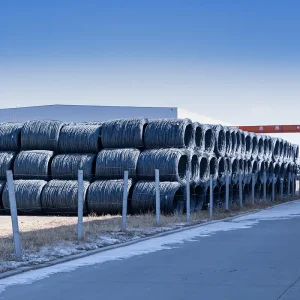
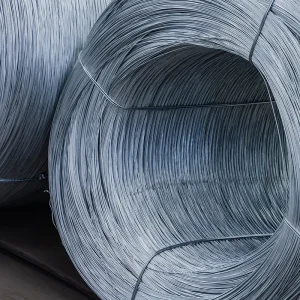
In the modern era of high-voltage transmission and dense fiber-optic communication networks, structural longevity is not merely a design preference; it is a critical safeguard against catastrophic failure. Hot-dip galvanized (HDG) steel wire acts as the central tensioning component and protective armor for electrical conductor cables and overhead lines. As an experienced metallurgical supplier, Hansheng Technology (Hebei) Co., Ltd. has established advanced systems to manufacture high-yield structural wire that meets these strict performance criteria.
Compared to standard electro-plated options, hot-dip galvanization forms a series of distinct iron-zinc alloy layers through an intense metallurgical reaction in a 450°C bath. This process provides sacrificial corrosion protection alongside an incredibly tough barrier. This ensures that overhead ground wires, messenger cables, and ACSR (Aluminum Conductor Steel Reinforced) cores maintain their strength for decades under high winds, heavy ice loads, and coastal environments.
Addressing structural vulnerability across extreme macro climates and transmission spans
Modern ultra-high-voltage power networks operate over massive spans, requiring conductors with exceptional tensile strength and low sag. Our custom carbon steel wires provide the structural backbone for these long-span crossings.
Optical Ground Wires (OPGW) combine power grounding and fiber-optic communication. This requires high-conductivity cladding alongside corrosion-resistant armor wire to protect delicate optical cores from physical and environmental stress.
Transitioning toward advanced zinc-aluminum-magnesium (ZAM) and Galfan coatings provides up to three times the corrosion protection of standard pure zinc, ensuring structures remain secure in highly corrosive marine environments.
In high-salinity coastal areas, salt spray accelerated rust on traditional steel wire. By adjusting the hot-dip chemical composition and incorporating high-purity SHG (Special High Grade) zinc blocks, Hansheng Tech manufactures heavy-coated Class A and Class B steel wires. These are designed to withstand more than 1,000 hours of neutral salt spray testing without exposing the base metal, meeting the requirements of demanding marine infrastructure projects.
Calculated parameters ensuring structural reliability under extreme stress and wind loading
| Steel Grade & Application | Standards Compliance | Diameter Range (mm) | Tensile Strength (MPa) | Min. Zinc Coating (g/m²) | Torsion/Wrap Test (1x Dia) |
|---|---|---|---|---|---|
| ACSR Core Wire (High Carbon) | ASTM B498 / IEC 60888 | 1.50 - 4.80 | 1310 - 1450 | 215 - 260 (Class A) | 8+ turns without cracking |
| OPGW Armor Wire | EN 50189 / BS 4565 | 2.00 - 3.50 | 1270 - 1770 | 240+ (Heavy Coated) | 100% adherence pass |
| Guy Wire / Stay Wire Strand | ASTM A475 / BS 183 | 3.05 - 4.77 | Common / High-Strength | Up to 325 (Class C) | Compliance certified |
| Messenger Steel Wire | JIS G3537 | 1.20 - 4.00 | Over 1170 | Standard to Heavy | Preece test 4+ dips pass |
How we address the quality and logistics challenges faced by global engineering and construction buyers
Global grid infrastructure projects require complete material traceability. Hansheng Tech verifies every batch from wire rod feeding through heat treatment to the final hot-dip line, providing comprehensive EN 10204 3.1 Mill Test Certificates.
Includes chemical heat analysis and mechanical test dataLocated in Tangshan City, Hebei Province—the heart of China's steel industry—our facilities sit just 150 kilometers from Tianjin seaport and 150 kilometers from Beijing. This central location helps reduce transportation times and shipping costs.
Enables reliable global shipping to ports worldwideWe design and test our products to meet strict international standards, including ASTM, JIS, DIN, EN, and AS/NZS. Third-party testing services like SGS, Bureau Veritas, or TUV are welcome for pre-shipment inspections.
ISO 9001 and ISO 14001 certified manufacturing facilitiesLeveraging deep manufacturing experience and modern processing technology to meet global standards
Since our establishment in 2006, Hansheng Technology (Hebei) Co., Ltd. has developed into a reliable manufacturing and export partner. We operate 8 high-efficiency production lines, supporting a designed group capacity of up to 650,000 metric tons annually, with current production facilities outputting 300,000 metric tons of finished wire, sheet, and structural steel.
We focus on providing consistent material quality, timely delivery, and clear technical communication. We work closely with partners across the Middle East, Southeast Asia, North Asia, Africa, Europe, and the Americas to supply components for key electrical grids and infrastructure projects.
Our hot-dip coatings are applied to ensure a uniform, strong metallurgical bond with the steel, resisting delamination even under sharp bends during installation.
Our lines feature real-time diameter monitoring and automated tension control to prevent deviations, supporting consistent high-speed coil winding.
Operating to ISO 14001 environmental standards, we employ advanced acid reclamation and low-emission heating to support more sustainable manufacturing.
Developing next-generation structural alloys and high-durability coatings for power grids
Increasing the deployment of alloy coatings to provide up to three times the corrosion resistance of standard zinc coatings, extending the lifespan of infrastructure in coastal and industrial areas.
Optimizing steel wire heat treatment through lead-free in-line gas patenting to improve ductility, achieving high tensile strength for long-span crossings.
Integrating laser-based diameter monitoring and automated coil weight packing to ensure consistent physical tolerances across large industrial orders.
Answers to common engineering and sourcing questions regarding hot-dip galvanized steel wire
Hot-dip galvanizing involves immersing clean steel wire in a molten zinc bath (~450°C), creating a thick layer of iron-zinc alloys and pure zinc. This layer typically ranges from 150 to over 300 g/m², providing sacrificial and barrier protection. Electro-galvanizing, in contrast, applies a thinner zinc layer (often 10–40 g/m²) through electroplating, which is suitable for indoor or mild environments but does not offer the long-term weather resistance required for outdoor utility lines.
Aluminum Conductor Steel Reinforced (ACSR) cables rely on the internal steel wire core to support the mechanical tension of long spans. Aluminum has good electrical conductivity but lower tensile strength, while high-tensile galvanized steel provides the necessary structural support, resisting sag under environmental loads like wind and ice.
We manufacture wire to comply with global standards, including ASTM A475 (for steel wire strand), ASTM B498 (for ACSR reinforcement cores), BS EN 50189 (utility grounding), and JIS G3537. Each shipment includes detailed certificates verifying chemical composition, tensile strength, elongation, and coating thickness.
In standard rural or suburban environments, the corrosion rate of zinc is relatively low (roughly 0.5 to 1 micron per year). A Class A galvanized coating of 250 g/m² (about 35 microns) can provide protection for decades. In coastal or industrialized areas (C4/C5 environments) where zinc corrodes faster, heavy coatings or Galfan/ZAM alloy alternatives are recommended to maintain structural integrity over the design life of the grid.
High-tensile carbon steel (tensile strength over 1200 MPa) can be susceptible to hydrogen embrittlement during acid pickling. Hansheng manages this risk by using controlled mechanical descaling alongside brief acid-cleaning steps, followed by an optimized baking sequence before galvanizing to release any trapped hydrogen.
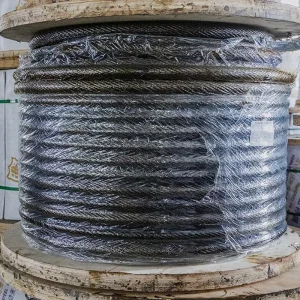
We package wire in standard coils, carriers, or wooden spools (ranging from 100 kg to over 1,000 kg per unit) wrapped in protective plastic. Our facility in Tangshan, Hebei, is 150 km from Tianjin seaport, allowing us to load containers and arrange dispatch to major ports within 15 to 25 days of order verification.
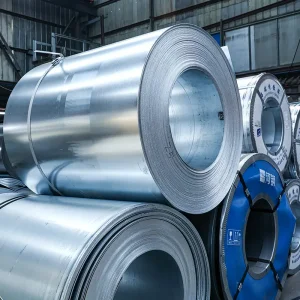
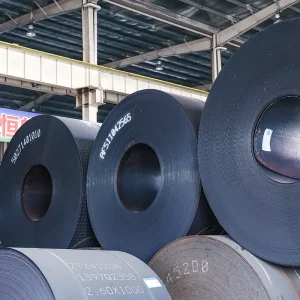
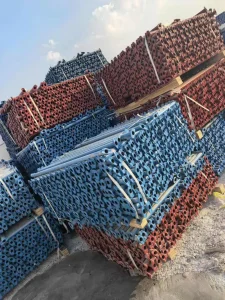
Providing a complete range of steel products, processed and supplied from our Tangshan hub
 Hanshen