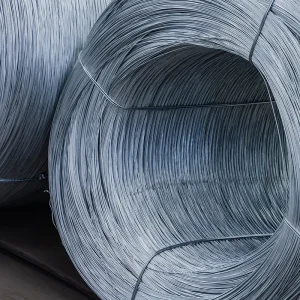
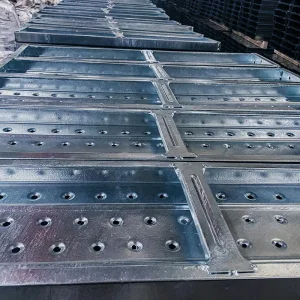
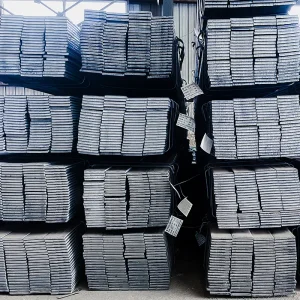
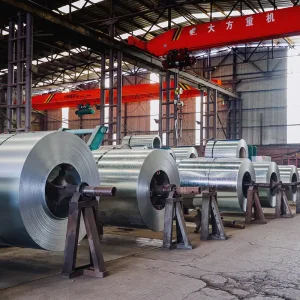
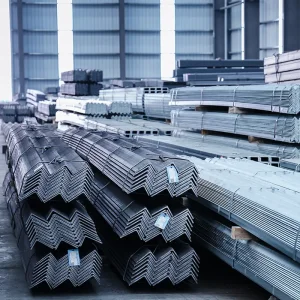
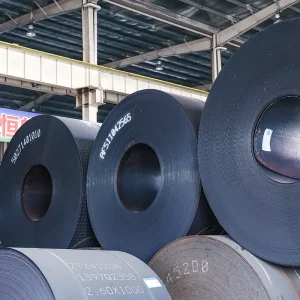
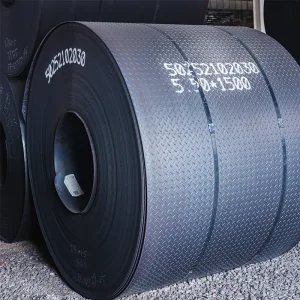
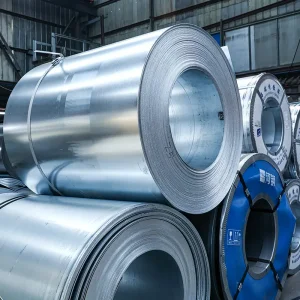
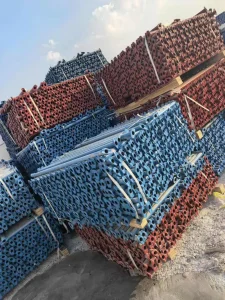
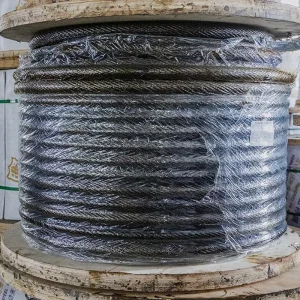
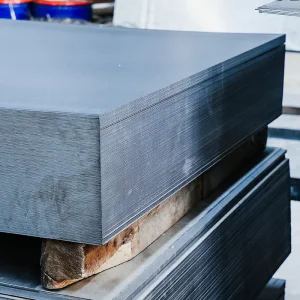
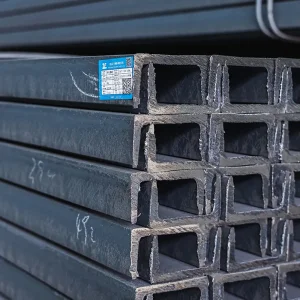
Explore our extensive portfolio of high-grade flat bars, wire ropes, coils, structural channels, and customized building materials.
A comprehensive deep dive into the metallurgy, passivation mechanics, and material longevity of high-performance flat steel.
Corrosion-resistant flat bars rely on a fundamental chemical reaction called passivation. By alloying steel with elements like Chromium (Cr), Molybdenum (Mo), and Nickel (Ni), the material develops an ultra-thin, self-healing oxide layer on its surface. When exposed to oxygen, this microscopic barrier halts the penetration of moisture and corrosive agents, preventing the destructive oxidation (rusting) typical of carbon steels.
For demanding environments, manufacturers combine alloying with state-of-the-art protective coatings. Integrating zinc-aluminum-magnesium (ZAM) alloys onto the flat bar surface creates a compound chemical barrier. Magnesium ions form a robust, carbonate-based crystalline film that self-heals cut edges and punched holes, offering up to ten times the protection of standard galvanization.
Specifying engineers rely on the Pitting Resistance Equivalent Number (PREN) formula: PREN = %Cr + 3.3%Mo + 16%N. Achieving optimal PREN values ensures that structures deployed in high-chloride zones (such as marine bridges or chemical production vats) avoid sudden pitting and crevice corrosion, ensuring decades of risk-free operation.
"Corrosion mitigation is not merely an aesthetic consideration; it is the cornerstone of structural reliability and life-cycle cost reduction. Incorporating optimized corrosion-resistant flat bars cuts maintenance shutdowns by up to 78% over a thirty-year operating life."
How macro-economic developments, green transitions, and material scarcity shape global procurement requirements.
Globally, civil engineering projects are pivoting toward materials that promise longevity with minimal carbon footprint. Corrosion-resistant flat bars are critical in solar tracker arrays, wind turbine internal frameworks, and coastal electrical grids. Traditional structural carbon steels require constant repainting and chemical treatments that leak hazardous compounds into the surrounding soil. Modern alloys eliminate the need for maintenance, satisfying stringent environmental regulations while reducing the lifetime greenhouse gas emission profiles of key public infrastructure works.
As offshore wind farms push deeper into high-salinity marine environments, the atmospheric and immersion corrosion zones demand higher material integrity. Standard galvanized metals degrade rapidly in C5-M (Marine) corrosive categories. Designers now specify flat bars manufactured with specialized, high-passivity alloy matrixes. These components can withstand continuous salt spray, mechanical abrasion from sand, and tidal stress without micro-fissuring.
Modern procurement directors are moving away from evaluating purchase price alone. Instead, they focus on Total Cost of Ownership (TCO). Procurement teams analyze structural downtime, shipping delays, logistics tariffs, and structural failure risks. Selecting a certified manufacturer with verified testing and quality assurance avoids the catastrophic costs associated with unscheduled industrial shutdowns.
Combining automated heavy manufacturing, logistical proximity, and absolute consistency in product output.
Our manufacturing base in Tangshan City, Hebei Province, integrates smart automation. This ensures high-precision temperature profiling during hot rolling and annealing stages. Temperature deviations are held within ±5°C, ensuring uniform grain boundaries throughout the entire length of the flat bars.
Strategically situated just 150 kilometers from the Tianjin seaport and 150 kilometers from Beijing, we leverage direct access to premier global shipping routes. This minimizes inland transportation latency, protects steel cargo from atmospheric moisture during transit, and guarantees predictable delivery schedules.
With 8 state-of-the-art production lines, Hansheng Technology meets bulk industrial orders on time. Our production capacity, scaling up to 650,000 tons annually, allows us to ramp up production volumes without compromising dimensional tolerance or chemical composition stability.
| Alloy Grade / Standard | Yield Strength (MPa) | Tensile Strength (MPa) | Corrosion Rate (C5 Environment) | Primary Industrial Applications |
|---|---|---|---|---|
| ASTM A36 (Galvanized) | ≥ 250 | 400 - 550 | < 0.05 mm/year | General Construction, Cable Trays, Light Framing |
| High-Zinc ZAM Alloy | ≥ 320 | 480 - 620 | < 0.005 mm/year | Photovoltaic Arrays, Coastal Utility Poles, Marine Rails |
| Cor-Ten Weathering Steel | ≥ 345 | 485 - 630 | < 0.015 mm/year | Architectural Cladding, Containers, Heavy Rail Cars |
| Premium Spring Steel (HR) | ≥ 850 | ≥ 1050 | Custom Coated Dependent | Suspension Systems, Industrial Springs, Cutting Blades |
Translating theoretical metallurgy into real-world industrial and commercial operations.
Flat bars act as the structural support purlins and links for heavy utility-scale photovoltaic tracker tables. The continuous exposure to rain, high ambient humidity, and fertilizers in agrivoltaic installations requires robust, corrosion-resistant metals that guarantee a 25-year structural design life without rusting.
Used extensively in fender support structures, pier railings, and walkways on offshore oil rigs. High corrosion resistance ensures structural components survive tidal action, continuous seawater splash zones, and heavy biological fouling without cracking or chemical degradation.
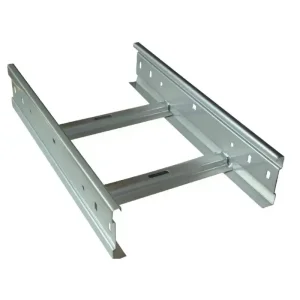
In petrochemical processing plants and deep mining shafts, corrosive fumes destroy standard carbon steel within months. Galvanized and ZAM-coated flat bars provide the structural skeleton for hot-dip galvanized cable trays, securing critical communication and power linkages.
Flat bars made from high-tensile spring steel are essential components for industrial leaf springs in commercial shipping trucks, defense vehicles, and railway bogies. They deliver superior elastic fatigue resistance under heavy mechanical cyclic loading.
In high-rise construction, scaffolding tie-backs, couplers, and toe-boards rely on zinc-coated flat steel to resist atmospheric humidity. This ensures that safety structural frameworks retain their load capacity and do not suffer structural degradation over prolonged project timelines.
Providing custom steel and logistics services to prominent contractors and industrial developers worldwide.



Authoritative answers to critical technical questions regarding corrosion-resistant flat bar procurement and specifications.
Premium solutions for global structural engineering, civil infrastructure, and heavy industrial applications.
 Hanshen