 Hanshen
Technical White Paper: The Evolution of Super Weather Resistant ZAM Coating Technology
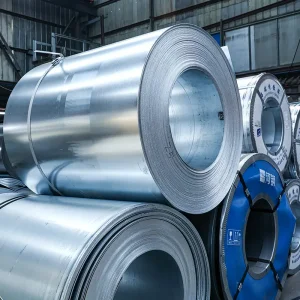
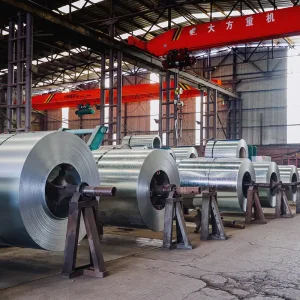
In modern industrial applications, structural degradation caused by environmental corrosion leads to billions of dollars in losses annually. Standard hot-dip galvanized (GI) and galvalume (GL) coatings, while useful, struggle under the combination of chemical pollutants, high chloride levels in coastal zones, and ammonia concentrations in agricultural settings. Super Weather Resistant ZAM (Zinc-Aluminum-Magnesium) alloy coil represents the pinnacle of surface engineering, delivering up to 10-20 times the corrosion protection of traditional galvanized steels through its self-healing microcrystalline boundaries.
Understanding the Science: The Chemical Composition & Self-Healing Action
The core advantage of ZAM coils lies within their precise alloy formulation. Rather than relying solely on pure zinc, ZAM combines Zinc with 6% Aluminum and 3% Magnesium. This specific configuration establishes a highly dense, microcrystalline eutectic structure during cooling. When the alloy coating is exposed to air, rain, or industrial humidity, magnesium and aluminum ions slowly dissolve, combining with ambient atmospheric compounds to generate a fine, cohesive protective film called Simonkolleite [Zn5(OH)8Cl2·H2O].
Traditional galvanized coatings form loose, porous zinc rust that flakes away, continuously exposing the underlying substrate. Simonkolleite, by contrast, behaves as an impermeable barrier. Most crucially, this chemistry enables an extraordinary self-healing mechanism at cut edges, drill holes, and shear lines. Over time, the Simonkolleite-rich compound migrates across the exposed carbon steel core, cutting off oxygen and chloride infiltration, preventing red rust from taking hold.
Coating Benchmark: ZAM vs. Hot-Dip Galvanized (GI) vs. Galvalume (GL)
| Performance Criterion | Hot-Dip Galvanized (GI) | Galvalume (GL) | Super Weather Resistant ZAM |
|---|---|---|---|
| Alloy Composition | 99% + Pure Zinc | 55% Al, 43.4% Zn, 1.6% Si | Zn + 6% Al + 3% Mg |
| Salt Spray Resistance | 200 to 500 Hours | 1000 to 1500 Hours | Up to 3000+ Hours (No Red Rust) |
| Cut-Edge Self-Healing | Poor (Immediate Red Rust) | Moderate (Slow migration) | Outstanding (Rapid Simonkolleite formation) |
| Ammonia & Alkaline Resistance | Low | Poor (Al dissolves in high pH) | Excellent (Highly stable in alkaline media) |
| Hardness & Abrasion Resistance | Soft (Low scratch resistance) | Medium | High (Vickers hardness up to 140-160 HV) |